2026-08-29 · 9 min read · Virginia
What Really Happens During a Home Inspection in Virginia?
Start here
It’s not a report card on your house. It’s just… inspection day.
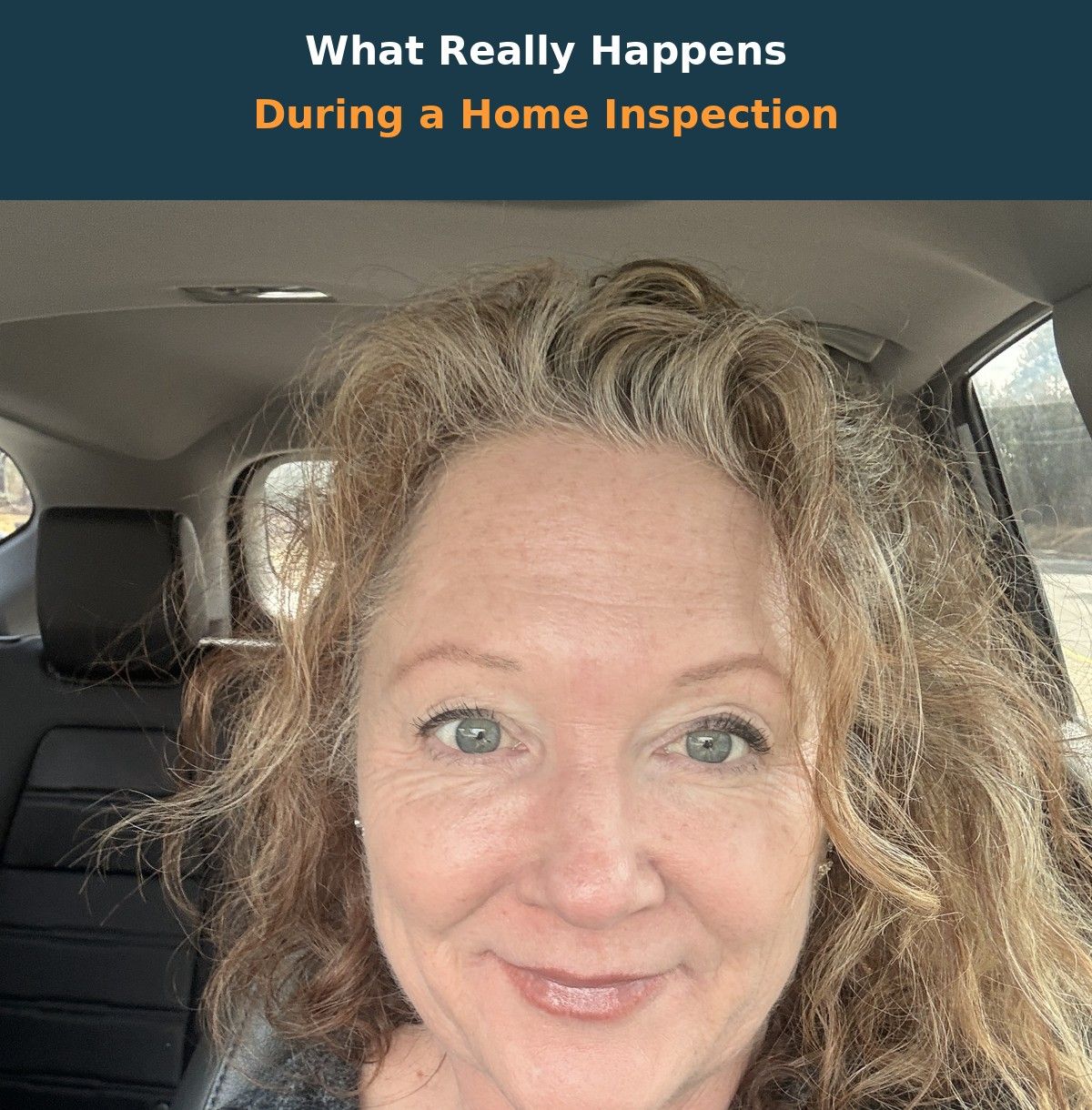
Yes, that’s me on the way to an inspection, somewhere between optimistic, curious, and mentally preparing myself for the words “minor issue.”
Home inspections have a funny way of making otherwise perfectly calm people suddenly very interested in crawl spaces, electrical panels and the exact age of a water heater.
But here’s the good news:
A home inspection is normal.
It doesn’t mean something is wrong with the house.
It doesn’t mean the buyer is looking for a way out.
And sellers, it is definitely not a test of how well you maintained your home.
Once a home goes under contract in Metro Richmond, an inspection is often one of the next big steps.
So what actually happens?
Let’s walk through it, Richmond-style.
How Long Is the Home Inspection Period in Virginia?
Unlike some states, Virginia doesn’t have one universal inspection period that applies to every home sale.
The inspection timeline is negotiated between the buyer and seller and written into the purchase contract.
In transactions I see around Chesterfield, Midlothian and Metro Richmond, that period is often somewhere around one to two weeks.
But that is not a rule.
Your contract determines your actual deadline.
This is one reason I always tell buyers and sellers:
Know the dates in your contract.
Real estate has enough surprises. We don’t need to create one because somebody forgot what day the inspection period ended.
Virginia’s commonly used residential purchase contract was also updated in May 2026, including changes related to inspections. So if you haven’t bought or sold a home in several years, some of the language and procedures may look different than you remember.
Who Comes to the Home Inspection?
The buyer chooses the inspector.
They may hire a general home inspector and, depending on the property or what is discovered, they may also bring in other qualified professionals.
That could include:
- An HVAC specialist
- Electrician
- Plumber
- Structural engineer
- Foundation specialist
- Roofer
- Pest-control professional
- Septic or well inspector
And this is why inspection experiences can look very different.
One inspector may produce a straightforward report.
Another may deliver what appears to be a small novel, complete with photographs, arrows, diagrams and enough detail to make a loose doorknob look like breaking news.
Neither automatically means something terrible has been found.
Inspectors are supposed to inspect.
That’s the job.
What Does a Home Inspector Actually Check?
A general home inspection typically looks at the visible and accessible components and systems of the house.
Depending on the home, that can include:
- Roof and exterior
- Foundation and structural components
- Heating and cooling systems
- Plumbing
- Electrical systems
- Attic and insulation
- Crawl space or basement
- Windows and doors
- Built-in or included appliances
- Water heater
- Safety items such as smoke detectors
- Other visible components of the property
One important thing to understand:
An inspection is a snapshot of the home's condition on that day.
The inspector isn't promising that the HVAC system will run for another eight years or predicting exactly when the dishwasher will decide it has washed its last plate.
They're evaluating what they can observe and operate right now.
Will the Inspector Find Something Wrong?
Almost certainly.
And that alone is not a reason to panic.
Even beautifully maintained homes usually have items noted on an inspection report.
It might be:
A loose handle.
A dripping faucet.
A missing GFCI outlet.
A window that sticks.
A burned-out bulb.
A handrail that needs tightening.
And yes, sometimes an inspection uncovers something more important that deserves additional evaluation.
But a “perfect” inspection report is rare.
Homes are made of thousands of components, and houses require maintenance.
That's normal.
The purpose of an inspection isn't to declare a home good or bad.
It's to give the buyer more information about the property they're purchasing.
Sellers: Where Should You Be During the Inspection?
Preferably?
Not home.
This is one of the questions sellers ask me all the time.
The inspection is really the buyer's opportunity to spend time in the property with their inspector and agent, ask questions and learn more about the house.
Give them the space to do that.
Depending on the size, age and complexity of the property, a general inspection may take roughly two to three hours, sometimes longer.
Go grab lunch.
Run errands.
Take the dog for an adventure.
Have coffee.
Whatever you choose, resist the urge to sit three houses away wondering why they have been in the crawl space for 27 minutes.
Longer does not automatically mean worse.
What About Pets During a Home Inspection?
This is a big one.
If possible, pets should be removed from the property during the inspection.
If that's impossible, they should be safely secured somewhere that will not prevent the inspector from accessing part of the home.
Remember, the inspector may need to open:
- Exterior doors
- Garage doors
- Closets
- Utility areas
- Crawl-space entrances
- Attic access
- Gates
Even the friendliest dog can become considerably less enthusiastic about strangers once somebody starts climbing into the attic.
What About Termites and Wood-Destroying Insects?
Wood-destroying insects are an important consideration in Virginia, especially because termites can cause damage that isn't always obvious during a casual walk-through.
Depending on the transaction and contract requirements, a wood-destroying insect inspection/report may also be ordered (In VA the seller is required to have the WDI report completed prior to closing and provide the report to the buyers for review).
This inspection is performed by an appropriately licensed pest-control professional and looks for evidence of termites and other wood-destroying insects.
It is often scheduled around the same time as the general home inspection and usually doesn't take nearly as long.
If evidence of infestation or damage is discovered, the next steps depend on what is found and the requirements of the transaction.
What If the House Has a Well or Septic System?
This is particularly relevant for buyers and sellers in parts of Chesterfield, Moseley and other areas surrounding Richmond where homes may not be connected to public water and sewer.
A well and septic system deserve their own evaluation.
Virginia strengthened requirements surrounding septic inspections in 2025, making the inspection more comprehensive than the old days of essentially giving the system a quick look and calling it good.
And that's a positive change.
A septic system is one of those things you definitely want to understand before buying a property.
Additional testing may also be appropriate for homes using private wells.
How Should a Seller Prepare the House for Inspection Day?
This is where sellers can make everyone's life easier.
You don't have to make the house perfect.
You do want the inspector to be able to access what they need to inspect.
Before inspection day:
- Make sure all utilities are turned on
- Leave labeled keys for doors, gates, sheds or other locked areas
- Leave a working garage-door opener if needed
- Make sure the electrical panel is accessible
- Clear access around the water heater
- Make sure HVAC equipment can be reached
- Make attic access available
- Make the crawl-space entrance accessible
- Unlock gates
- Secure or remove pets
And here's one inspection-day tip almost nobody thinks about:
The inspector may run the dishwasher through an entire cycle.
So you have two choices.
Leave it empty...
or consider inspection day your chance to get one free load of dishes washed.
Kidding.
Mostly.
What Happens After the Inspection?
This is the part that sellers tend to worry about most.
The inspector provides the report to the buyer.
Then the buyer reviews the findings with their agent and decides how they want to proceed based on their contract.
Depending on the inspection terms agreed to in the purchase contract, the buyer may:
1. Move Forward Without Requesting Anything
Yes, this happens.
A report can contain plenty of observations without the buyer asking the seller to address them.
2. Request Repairs or Another Resolution
The buyer may submit a written request regarding certain inspection findings.
That could involve repairs or another negotiated solution permitted by the contract.
3. Exercise Rights Available Under the Contract
Depending on the specific inspection contingency and circumstances, the contract may give the buyer additional options.
This is why I hesitate when people say things like:
“A buyer can always cancel after the inspection.”
or
“A seller has to fix everything the inspector finds.”
Neither statement should automatically be assumed.
Does the Seller Have to Fix Everything on the Inspection Report?
No.
This is probably one of the biggest misconceptions surrounding home inspections.
An inspection report is not a seller's repair list.
It is information provided to the buyer.
What the buyer may request, and what the seller may agree to, depends on the terms of the contract and the negotiations between the parties.
There's also an important difference between:
“This isn't working properly.”
and
“I don't particularly like this.”
An inspection generally isn't meant to turn an existing home into brand-new construction.
The goal is to identify legitimate concerns and then determine what actually matters.
What If the Buyer and Seller Don't Agree?
Welcome to the part of real estate where a calm head becomes particularly valuable.
If the buyer submits an inspection request and the seller doesn't agree with everything in it, that doesn't necessarily mean the transaction is falling apart.
There may be negotiation.
Maybe the seller agrees to some items but not others.
Maybe additional information is needed.
Maybe a contractor needs to take another look.
Maybe something that sounded alarming in an inspection report turns out to have a fairly simple solution.
This is where experience and communication matter.
My job isn't to make an inspection report disappear.
My job is to help my clients understand what matters, what the contract says, what the options are and what makes sense next.
Without panic.
Preferably without anybody throwing their phone.
Home Inspection FAQs for Richmond-Area Buyers & Sellers
How long does a home inspection take?
Many general home inspections take around two to three hours, although larger, older or more complicated homes may take longer.
Should the seller attend the buyer's home inspection?
Generally, I recommend giving the buyer, inspector and buyer's agent privacy and space to complete the inspection.
Is it bad if the inspector finds a lot of things?
Not necessarily. Inspection reports commonly include numerous maintenance items and observations. The type and significance of the findings matter more than the number of pages in the report.
Does an inspection mean the buyer can demand anything they want?
No. Inspection rights and negotiations depend on the terms of the purchase contract.
Is an inspection the same thing as an appraisal?
No. They serve very different purposes. An inspection focuses primarily on the property's condition. An appraisal is primarily about value for the lender and loan.
The Bottom Line
A home inspection isn't a pop quiz on how well you cared for your house.
And it isn't automatically a sign that a transaction is in trouble.
It's simply one of the ways a buyer learns more about the home they're purchasing.
There may be a few little things.
There may be something worth taking a closer look at.
And occasionally, there may be a bigger conversation.
Whatever that report says, the goal is the same:
Understand the information. Understand the contract. Make a good decision.
And yes, I'll probably be driving around Richmond to the next inspection looking just like that picture:
Calm on the outside. Curious on the inside. And waiting to find out exactly how “minor” the minor issue is.
Buying or Selling a Home in Metro Richmond?
Whether you're buying your first house or selling the home you've owned for 25 years, knowing what happens before you reach each stage makes the entire process feel a lot less intimidating.
That's a big part of my job.
No drama. No pressure. Just good information and honest guidance so you can make the decision that's right for you.
Humans Over Houses. Always.
- Christine Case, REALTOR®
- NextHome Advantage
- Serving buyers and sellers throughout Chesterfield • Midlothian • Moseley • Metro Richmond, Virginia
Let's make your next move your best move.
For information on Virginia's current residential purchase contract and inspection provisions, Virginia REALTORS® provides resources here. Local Richmond-area market statistics are available through CVR MLS, with national housing research available through the National Association of REALTORS®.
Talk it through with Christine
Buying in Midlothian, Chesterfield or anywhere in Metro Richmond and want to talk it through first? I'm Christine Case, a REALTOR® with NextHome Advantage, and I would rather help you understand your options than rush you into anything. Start with what living in Midlothian is really like, browse more straight answers on the blog, or send me your question and I'll answer it myself.